ADA Certified Portable Restrooms: Turning Room and Clearance Basics
When people inquire about an ADA compliant mobile bathroom, they are usually actually asking an easier inquiry beneath the lawful language: can an individual get in, relocate securely, use the bathroom with dignity, and come back out without unneeded struggle?
That is where transforming area and clearances matter. They are not technical details. They are the difference between gain access to that works and accessibility that just looks appropriate from a distance. I have actually seen organizers concentrate on the visible attributes, a larger system, a sign on the door, a ramp nearby, and miss out on the thing that matters most as soon as someone goes into. If the interior does not permit transforming, approach, positioning, and door maneuvering, the restroom might still fall short the individual even if it appears to inspect the box.
For any individual preparing an ada mobile toilet rental for an occasion, a public event, or a short-term website open to the general public, this subject deserves greater than a quick skim. The government standard comes from the 2010 ADA Criteria for Accessible Layout, as interpreted by the Division of Justice and the Gain Access To Board. For mobile single-user bathroom collections, at least 5 percent of the devices in each cluster need to come, and the Gain access to Board explains that this uses even at short-term events. That one policy alone catches several organizers off guard, particularly those who assume accessibility regulations soften due to the fact that the arrangement is short-term. They do not.
The obtainable unit is not simply the "larger one"
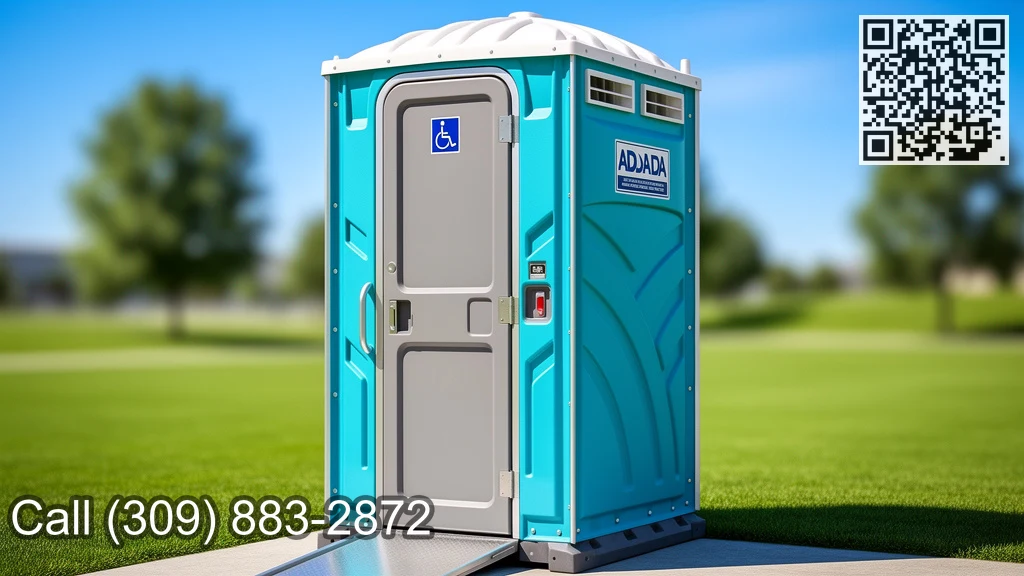
A typical mistake is to describe any type of oversized system as an ada available mobile bathroom. Dimension aids, however dimension on its own is not compliance. The obtainable system should be identified with the International Icon of Availability, and it should meet toilet-room technological demands. That includes transforming area, component clearances, door navigating clearances, and the suitable regulations for grab bars and water-closet clearance.
This issues since wheelchair gadgets do not move like standing pedestrians. A wheelchair or mobility scooter user needs space to go into, change instructions, approach the bathroom, and setting for transfer. An individual utilizing a pedestrian may require added room to take care of the door and support themselves prior to sitting. Somebody with balance limitations may rely greatly on grab bars and clear flooring room even if they do not use a wheelchair in all. Gain access to is seldom one-size-fits-all, which is specifically why the requirements concentrate on usable room and technique geometry as opposed to broad labels.
If you have ever before stood inside a really usable ada certified mobile bathroom, you see the distinction right away. The room really feels deliberate. There suffices open area to transform. The technique to the toilet is not pinched by indoor features. The door does not produce a catch where the user need to twist awkwardly just to close it. Great accessible design has a tendency to really feel tranquil due to the fact that it reduces friction.
Why transforming room gets a lot attention
Turning space is one of those expressions individuals repeat without always comprehending it. In method, it talks to whether an individual can reverse program or reorient inside the device. An individual may need to enter dealing with one instructions and leave encountering one more. They may require to line up with the toilet from a specific angle. They may need to avoid backing thoughtlessly into a wall or fixture.
Portable washrooms make this harder than permanent buildings do due to the fact that every inch is under stress. The covering is tiny. Parts take on each other. The commode, grab bars, door swing, and indoor layout all impact the exact same restricted footprint. If the design or placement is careless, the "added room" can disappear fast.
This is likewise why area problems matter so much. Also a correctly developed ada certified portable toilet can become functionally inaccessible if it is put where a person can not reasonably get to the door or enter it easily. The standards need an obtainable path and entryway, and any type of needed ramps or landings need to comply with the ADA technical needs. In other words, indoor access and website gain access to are looped. You do not actually have one without the other.
I have actually seen event formats where the available unit was practically present but parked beside a muddy area, numerous inches lower than the bordering quality, or reached only by going across soft crushed rock. The washroom existed. Accessibility did not. That detach irritates visitors and develops avoidable risk for organizers.
Clearance is where comfort and compliance meet
"Clearance" seems dry, yet it governs almost every purposeful activity inside a mobile commode. It describes the usable area around the toilet, near the door, and within the area overall. Clearance identifies whether somebody can place beside the component, use grab bars correctly, and run the door without strain.
For lots of customers, door maneuvering clearance is the very first obstacle. If the door is hard to handle and the interior leaves no room to control it, the individual begins the whole process at a disadvantage. In an irreversible structure, there may be wider vestibule room or wall deepness to soak up unpleasant activity. In a mobile system, that margin is much thinner. That is why the technological rules matter so much. A minor design mistake can make the whole unit much much less usable than intended.
Water-closet clearance is similarly important. The criteria call for relevant water-closet clearance guidelines, and those policies are not ornamental. They are tied to genuine transfer activities and assistance demands. Order bars just assist if a person can get to and utilize them from a secure placement. If the commode is jammed also near surrounding surface areas or interior obstructions, benches lose much of their functional value.
What I usually inform organizers is this: accessibility lives in the activity, not the advertising and marketing. A pamphlet can call something an ada handicap accessible mobile restroom all day long. The actual examination is whether a customer can carry out the standard sequence of entry, turn, approach, transfer, use, and exit with reasonable security and independence.
Temporary events still count
There is a persistent misconception that short-term setups come under a gray area. The Accessibility Board advice does not support that assumption. For collections of portable single-user commodes, a minimum of 5 percent must be accessible, and this uses even at short-lived events.
That point should have emphasis since lots of leasings occur under time pressure. Fairs, wedding events, local celebrations, school functions, race-day setups, and seasonal activations usually move fast. Organizers may deal with mobile sanitation as one line thing amongst lots of and rely too heavily on behavior. The "typical order" gets duplicated without checking whether the number and sort of systems really fit the event.
A simple example reveals the risk. If a collection has twenty single-user mobile toilet devices, at the very least one available system would certainly not be enough if 5 percent needs even more than that in context. Coordinators need to determine meticulously based on the collection matter as opposed to on impulse. While the arithmetic itself is straightforward, the useful lesson is bigger: access can not be an afterthought or a favor. It belongs to the base plan.
The exact same concern arises when toilets are spread across a large site. Individuals often tend to think around the world, indicating "we leased one accessible unit somewhere." Customers experience the occasion in your area. If the obtainable device is separated far from the activity area where somebody is spending their time, the setup might be deeply inconvenient also prior to any person assesses technological conformity. Great planning asks not just "did we rent it?" but likewise "did we position it where individuals can actually use it?"
Accessible course and entry, where many blunders begin
A certified interior means little if the technique falls short. The verified government guidance is clear that mobile accessible units must have an available route and entrance, and any kind of needed ramps and landings must comply with ADA technical requirements. That is very easy to state, but on the ground it demands interest from the first distribution conversation.
Site surface areas shift. Weather changes. Vendors show up in turn. A system placed completely on Thursday can become hard to get to by Saturday after fencing, hosting, cords, short-term barriers, or lorry paths alter blood circulation. I have viewed otherwise mindful setups untangle due to the fact that nobody took another look at the path after the rest of the website filled in.
The best useful practice is to walk the path as though you were the visitor who requires it. Beginning where people actually get here. Adhere to the path to the unit. Notification incline changes, soft surface areas, puddling, sudden changes, crowd pinch factors, and whether the entrance feels obvious. The requirements manage the legal baseline, but empathy enhances the outcome. If the path really feels unpredictable to an able-bodied coordinator during a calm website walk, it will likely be worse for a visitor browsing an active event.
Here are five inquiries worth asking before sign-off:
- Is the accessible system clearly understood the International Symbol of Accessibility?
- Does the easily accessible route stay usable after the full site construct, not just at delivery?
- If a ramp or touchdown is required, has it been dealt with as a compliance thing as opposed to an ease add-on?
- Can a customer technique and get in without battling unstable ground or blocked circulation?
- Once within, is there genuine turning space and door handling clearance, not just a bigger shell?
That brief testimonial captures a surprising number of avoidable problems.
Clusters, counts, and the distinction between paperwork and experience
The 5 percent policy for clusters sounds basic, and in one feeling it is. Still, clusters are where compliance conversations commonly obtain flattened right into math alone. A planner might please the matter however miss out on the lived experience of use.
Suppose an event has numerous washroom areas across a grounds. Each location operates as its own cluster for the people near it. The conformity conversation ought to show exactly how individuals in fact relocate through the site. Even where the needed variety of obtainable units has actually been leased on the whole, poor circulation can create long detours and isolated accessibility. It deserves discussing placement with the rental company early, specifically when presence patterns will certainly be uneven.
This is where experienced judgment issues. An ada mobile washroom is not a decorative function to put out of sight. It must be incorporated into the exact same practical logic that regulates every other restroom placement: proximity, visibility, course top quality, and maintenance accessibility. Ease of access works best when it is average and expected, not dealt with as an exception.
For event teams, that may need altering practices. Some staffs put the bigger obtainable device wherever it fits most easily during distribution. That technique can backfire since the bigger impact typically requires one of the most mindful place planning, not the least. Space around the device, method problems, and entryway orientation all influence usability.
The construction-site exemption individuals misunderstand
One of the much more confusing factors in this area entails construction websites. The ADA Standards background differentiates portable bathroom units at construction websites used exclusively by construction personnel. Those are exempt from the portable-toilet accessibility scoping demand referenced in the 1991 requirement. People often listen to that slim factor and overgeneralize it.
The much safer reading is the limited one. For general portable toilet leasings available to the general public or offering more comprehensive customers, the accessible-unit demand continues to be. That indicates you ought to not think that because an unit is portable, short-lived, or on an energetic site, the accessibility regulations vaporize. Context matters.
This distinction matters for mixed-use situations. A site may be incomplete while likewise holding neighborhood functions, sales task, or temporary public gain access to. Once the use instance relocates beyond a toilet offering only building and construction personnel, the preparation conversation adjustments. If there is unpredictability, it is smart to treat ease of access as the default preparation posture instead of searching for a loophole.
The label on the door matters, however it is not the entire story
An ada compliant mobile bathroom should be related to the International Symbol of Ease Of Access. That marking matters since it tells guests where to go and signals that the unit is intended for obtainable use. Still, the sign is purposeful only when coupled with a genuinely usable setup.
I have actually heard guests state, silently and politely, that the worst experiences are not outright lack however false self-confidence. They see the sign, make their way throughout the site, wait their turn, and after that find that the course is rough, the entrance is tough, or the inside does not sustain the motions they need. That kind of frustration is avoidable.
For carriers, there is a useful lesson here. Sales language such as ada-compliant portable toilets or ada compliant portable toilets must never ever outrun what is actually being provided and just how it is being sited. For occupants, the lesson is equally straight. Ask simple questions. Is the unit significant appropriately? Does it meet the needed technical standards? What does the easily accessible course look like when whatever is in area? If a ramp or landing is necessary, who is in charge of making certain it complies?
Enforcement is part of a larger ADA climate
Accessibility needs are not fading into the background. Also outside the restroom context, ADA conformity continues to sit inside a broader enforcement environment. Recent government assistance extending web and mobile access due dates for state and local government entities emphasizes a vital truth: ADA compliance continues to be energetic throughout sectors.
That wider climate matters because companies usually take too lightly how accessibility problems link. The exact same firm, venue, town, or event producer that is evaluating digital availability might also require to look more challenging at momentary physical accessibility. Portable hygiene can appear tiny compared with buildings, internet sites, allows, and operations. To the individual that requires the toilet, it is not small at all.
A thoughtful company deals with an ada mobile bathroom as component of its public-facing access pose, not as an isolated rental line. That change in frame of mind tends to improve outcomes due to the fact that it welcomes better sychronisation in between operations, centers, occasion planning, and threat management.
Where real-world arrangements often go wrong
Most failures are not dramatic. They are advancing. A slightly poor positioning here, an afterthought route there, a blocked method after an additional vendor gets here, a system chosen for impact without sufficient focus to maneuvering inside. Each selection may look small theoretically. Together they develop a washroom that many individuals can not utilize effectively.
The reoccuring difficulty places are normally these:
- Treating the accessible device as optional until completion of planning.
- Counting the system correctly but putting it poorly.
- Focusing on outside appearance while neglecting transforming room and clearances.
- Ignoring the path after weather condition or site develop changes conditions.
- Assuming short-lived events obtain more freedom than the requirements really allow.
None of these troubles is extravagant, and that is exactly why they continue. They are regular errors. Routine mistakes require regimented regular fixes.
Better inquiries lead to much better rentals
If you are organizing an ada mobile bathroom leasing, the best discussions are not abstract. They are concrete. Ask just how the easily accessible system will certainly be determined. Ask about the path and entry. Ask whether ramps or landings are required and just how they will certainly fulfill the technical needs. Ask exactly how the system's inside supports the called for transforming area, navigating clearance, and fixture clearances. Ask these concerns prior to shipment day, not while guests are arriving.
There is additionally value in walking the website with both operations and visitor experience in mind. A washroom that is legally certified however hard to discover, isolated from the primary activity area, or surrounded by congestion can still create a poor customer experience. The standards provide the minimal technological limit. Good planning includes sound judgment and respect.
That mix matters most for the people that depend on it. A genuinely available configuration reduces anxiousness before it starts. Visitors do not have to wonder whether the route will function, whether the door will certainly trap them, or whether the inside will certainly support fundamental motions. They can simply make use of the center and go on with the remainder of their day, which is specifically the point.
Access that works is rarely accidental
The strongest ada compliant obtainable portable washrooms are almost always the result of intentional options. Somebody thought about the collection count. Someone ensured the easily accessible route remained open after various other tools arrived. Someone checked the entryway problems. Somebody comprehended that turning area and clearances are not legal facts however the core of useful access.
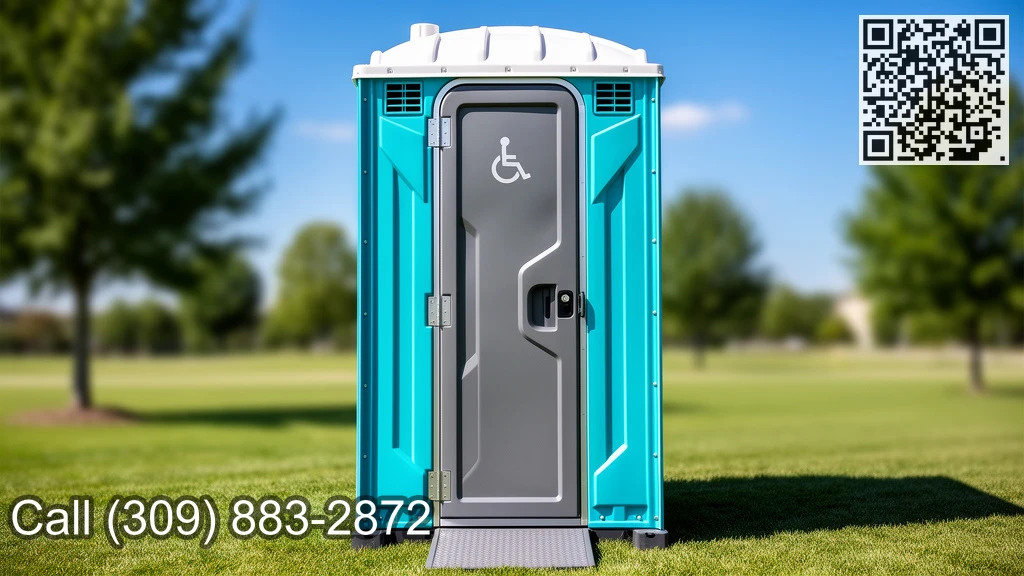
That degree of care is not luxurious. It is sensible, and it is gentle. When an ada-compliant portable commode is selected and placed well, really little telephone calls focus to it. Individuals use it as needed. Activity is smoother. Aggravation drops. The occasion or website really feels much more welcoming since it in fact is much more welcoming.
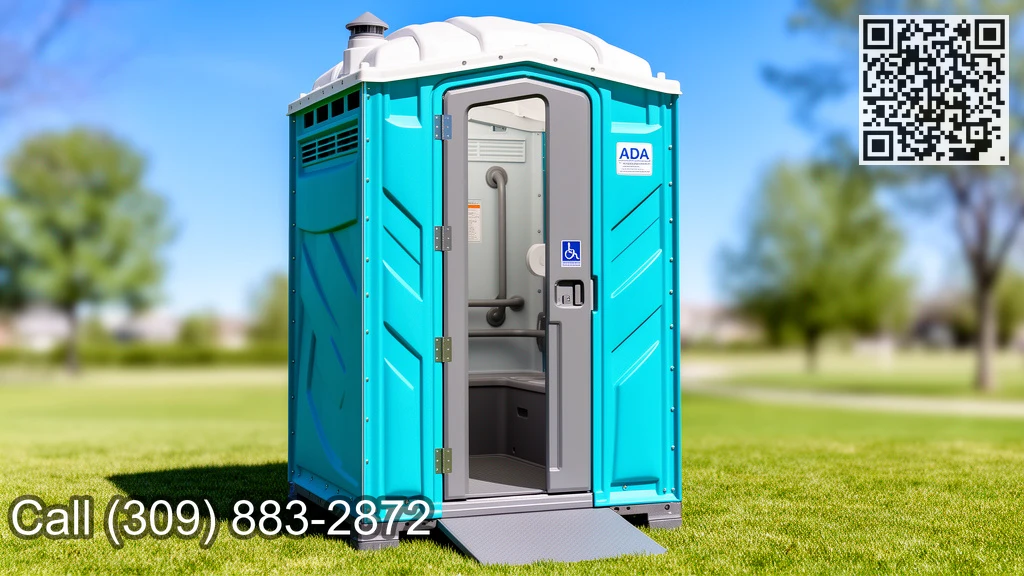
Portable bathrooms will never ever feel luxurious, and that is https://sethkwjp699.urbanvellum.com/posts/ada-mobile-bathroom-rental-for-events-understanding-accessible-system-requirements not the standard. The standard is use, self-respect, and compliance grounded in the 2010 ADA structure. For renters, suppliers, and coordinators, that implies withstanding shortcuts and taking area seriously, specifically the turning space and clearances that identify whether the washroom operates in real life.
When you get those basics right, you are not simply renting out a bigger box. You are making room for people to participate fully.
 Ask ChatGPT
 Ask Grok
 Ask Perplexity
 Ask Claude
 Ask Google AI
 Ask You